Steering Wheel Sensor
Steering Wheel Sensor
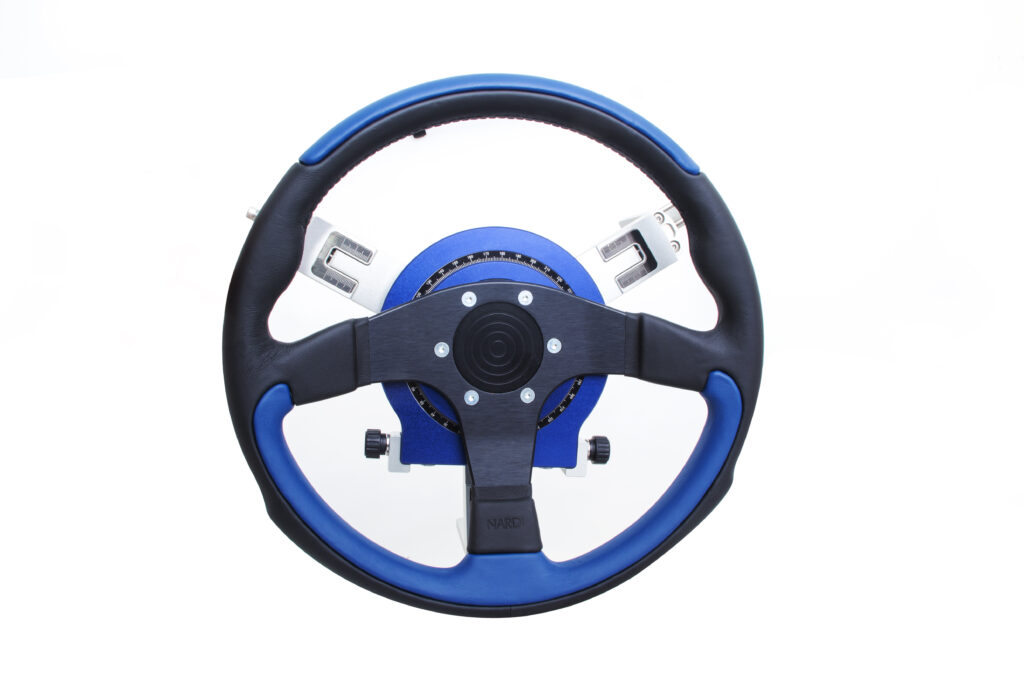
The RACELOGIC Steering Wheel Sensor connects directly to a data logger and measures a vehicle’s steering angle or torque.
- CAN and analogue output to your data acquisition system
- 3 sensor variants: 50, 100 and 200 Nm torque
- Steering angle resolution 0.1°
- Ideal for tests such as ECE R79, ISO 4138 and ISO 7401
Technical Specifications
Steering Wheel Sensor
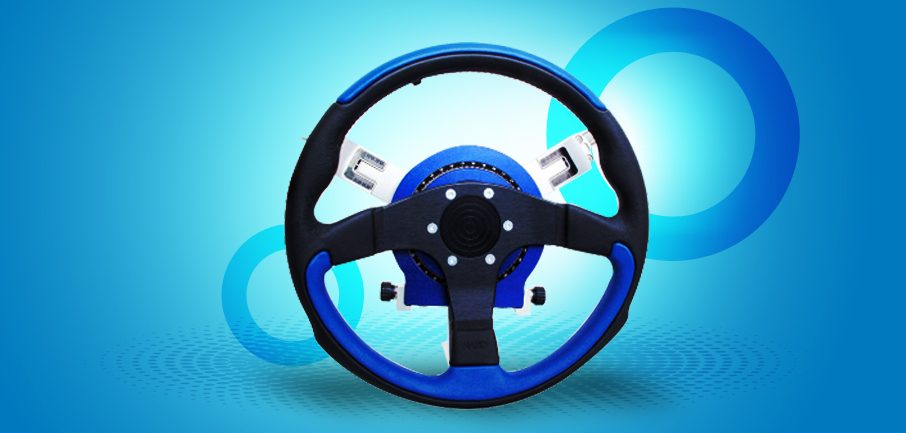
Steering Wheel Sensors are high-precision measurement devices designed to capture steering angle, torque, and rotational movement with exceptional accuracy. They offer real-time data acquisition with high resolution, ensuring reliable analysis of vehicle dynamics and driver input.
The system supports seamless integration with CAN bus and other data logging platforms for synchronized measurement. With robust construction, low latency, and high repeatability, Steering Wheel Sensors are ideal for automotive testing, ADAS development, and vehicle control validation.
Key Features
- Measures steering angle and torque with high accuracy for vehicle testing applications
- CAN Bus and analogue outputs for direct connection to data acquisition systems
- Available in three torque variants: 50 Nm, 100 Nm and 200 Nm
- High dynamic response with fine steering angle resolution of 0.1°
- Ideal for compliance tests such as ECE R79, ISO 4138 and ISO 7401
- Does not interfere with existing steering wheel controls
- Quick and easy installation with universal steering wheel adapter
- Can be calibrated to ISO 17025 standard for accuracy assurance
- Compact and lightweight design for convenient use
Applications
Vehicle dynamics and steering behavior analysis
ADAS and autonomous vehicle development
Automotive research and development (R&D)
Driver input monitoring and performance evaluation
Validation of steering systems and control algorithms
Testing of lane keeping and stability control systems
Real-world driving data collection
Integration with CAN-based vehicle systems for diagnostics
|
Range
|
Linearity
|
Hysteresis
|
Maximum Load
|
|---|---|---|---|
|
Range
|
Sensor Type
|
Output Phase
|
Signal Type
|
Output Pulse
|
Resolution
|
Max. RPM
|
|---|---|---|---|---|---|---|
Have Questions? Get in Touch
What is a Steering Wheel Sensor and what does it measure?
A Steering Wheel Sensor is used to measure steering angle and steering torque applied by the driver. It provides real-time data on driver input, which is essential for vehicle dynamics analysis, ADAS validation, and steering system development.
Why is steering angle and torque measurement important?
Steering inputs directly influence vehicle behavior. Measuring angle and torque helps engineers analyze driver intent, steering response, stability, and control characteristics, especially during maneuvers like cornering, lane changes, and emergency handling.
Where are Steering Wheel Sensors typically used?
They are commonly used in:
- Vehicle dynamics and chassis development
- ADAS and autonomous system validation
- Steering system calibration
- Driver behavior analysis and research
How is a Steering Wheel Sensor installed?
The sensor is typically mounted inline with the steering wheel or column, without major modification to the vehicle. Many systems are designed for quick installation and removal, making them suitable for both test vehicles and temporary setups.
Can the Steering Wheel Sensor integrate with data logging systems?
Yes, it can be integrated with data loggers like VBOX via CAN, analog, or digital outputs. This allows synchronized logging of steering data along with speed, position, and other vehicle parameters for comprehensive analysis.