Gaxce Sensors

Uncategorized

Uncategorized

How to Use a G-Meter Brake Efficiency Tester: Step-by-Step Guide, Best Practices & FAQs

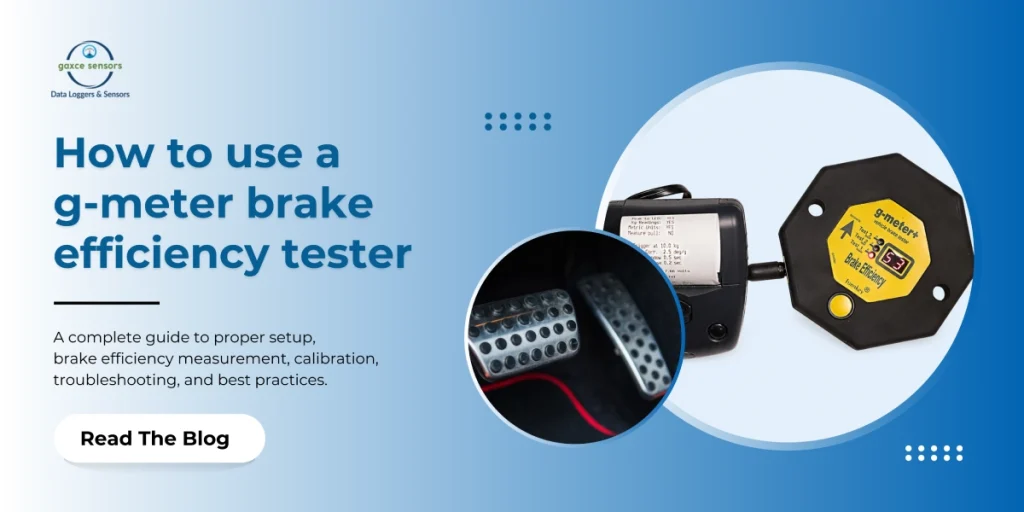
Quick Answer: How to Use a G-Meter for Brake Efficiency Testing Brake performance is one of the most safety-critical checks in any vehicle inspection. For vehicles that can’t be tested on a roller brake efficiency tester — certain trailers, HGVs, vintage vehicles, or vehicles with unusual axle configurations — a g-meter (decelerometer) is the go-to tool for statutory MOT brake efficiency testing. This guide walks through exactly how to use a g-meter, the official test procedure, common mistakes to avoid, and answers to the questions testers ask most. What Is a G-Meter Tester? A g-meter is a portable electronic decelerometer used for statutory MOT brake efficiency performance testing of Class I–VII vehicles and Heavy Goods Vehicles. It measures how quickly a vehicle slows down during braking and displays the result as either: Modern g-meters use a multi-axis electronic sensor rather than an old-fashioned mechanical pendulum. That gives testers several practical advantages: automatically senses the direction of travel, so precise placement isn’t critical stores the results of the last test, even after power-off timestamps every test automatically both are captured for a complete picture flags a low battery or an overdue calibration before you can misuse the device ensures results are legally defensible Key Specifications to Know Before You Start Feature Detail Measurement range 0 to 2.0 g Accuracy Better than ±3% g Display 2-digit, 7-segment LED, readable in sunlight Start window 0.5 seconds Brake threshold 10% g Tilt compensation 2.5 degrees per g Battery 9V PP3 alkaline (or CR2032 lithium backup) Battery life ~20 hours (PP3) Memory 1 test result Interface RS232C via 4-pole 2.5mm jack Understanding these specs matters because they explain why the device behaves the way it does — for example, why it needs a 0.5-second window to start recording, or why it won’t register a “test” until deceleration crosses the 10% g threshold. Step-by-Step: How to Use a G-Meter for Brake Efficiency Testing The 8 steps above cover the summary — here’s the full detail behind each one. Step 1: Switch the Device On Press and release the large yellow button. The display shows — briefly while the g-meter performs a self-check and recovers its last settings from memory. If E1, E2, or E3 flashes, stop and contact the manufacturer — do not proceed with a test. Step 2: Check the Battery and Calibration Status Do not carry out statutory testing if either warning is showing. Using an out-of-calibration or low-battery device invalidates the test and risks an unsafe pass/fail decision. Step 3: Position the G-Meter in the Vehicle Step 4: Arm the Device for a New Test Press and hold the button. The previous stored result is only overwritten once a new test is completed, so you won’t lose data by arming and then cancelling. Do not move the vehicle or disturb the g-meter until go is displayed. If you need to cancel, press the button again; the previous test result is retained. Step 5: Drive and Brake Following the procedure in the current MOT Inspection Manual: During the test, the display shows: The g-meter automatically detects the start and end of deceleration — you don’t need to press anything mid-test. Step 6: Read and Record the Result Once the test completes, the g-meter retains the peak and mean deceleration figures in memory. You can toggle the display between: Record the figures against the vehicle’s required Brake Efficiency Table values. Step 7: Switch Off The g-meter automatically powers off if the button isn’t pressed for 4 minutes (it will not auto-off while armed for a test). To switch off manually, double-click the button. Roads Suitable for Decelerometer Testing Not every road is appropriate for a decelerometer brake efficiency test. The test road should: Testing Transmission Handbrakes When testing a transmission-type handbrake with a decelerometer, keep the ratchet disengaged for as long as the brake is applied, and take the efficiency reading before any transmission snatch or judder occurs. Snatch/judder can produce a falsely high or erratic reading. Best Practices for Accurate G-Meter Testing Common Mistakes to Avoid Mistake Why It’s a Problem Testing with the Lo battery warning flashing Statutory results become invalid; battery-related sensor drift is a real risk Testing with the cd calibration warning flashing Calibration is a legal requirement for statutory MOT testing — results won’t hold up Moving off before go appears The device hasn’t finished tilt compensation, so accuracy is compromised Mounting the g-meter loosely or on an angled surface Movement or excessive tilt during braking skews peak/mean readings Ignoring steering pull or swerve during the service brake efficiency test This is a specific rejection criterion in the MOT Inspection Manual, independent of the numeric efficiency reading Testing transmission handbrakes through snatch/judder Produces an inaccurate efficiency figure Overusing the same public road for repeat testing Can generate resident complaints and isn’t in line with recommended practice Reasons a Vehicle Fails a Decelerometer Brake Efficiency Test According to the MOT Inspection Manual method of inspection, a vehicle should be rejected if: Frequently Asked Questions (FAQs) What is a g-meter used for? A g-meter (decelerometer) is used for statutory MOT brake performance testing of vehicles that can’t be tested on a roller brake efficiency tester, measuring brake efficiency efficiency as a percentage or deceleration in metres per second squared. What speed should I drive at for a decelerometer brake efficiency test? The MOT Inspection Manual specifies driving at a steady speed of approximately 20 mph (32 kph) on a level road before applying the brake being tested. How accurate is a g-meter? A typical g-meter offers accuracy better than ±3% g, with 1% g resolution on the LED display, and uses UKAS-traceable multipoint calibration. Can I use a g-meter if the calibration is overdue? No. If the display flashes cd, calibration is due and the instrument must not be used for statutory testing until it’s recalibrated. What does it mean if the g-meter shows Lo? Lo means the battery is exhausted and needs replacing with a 9V PP3 alkaline battery. Do

Uncategorized

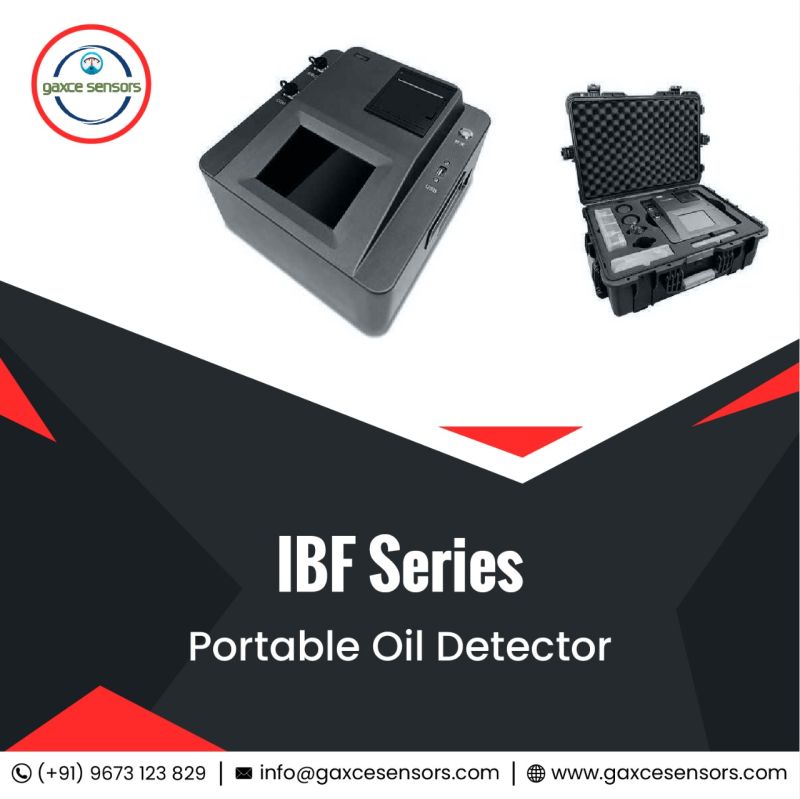
IBF Series Portable Oil Detector GAXCE SENSORS – Environmental, Health and Safety

IBF Series Portable Oil Detector GAXCE SENSORS – Environmental, Health and Safety The portable oil analyzer from the IBF Series utilizes advanced sensing and detection technology to detect the various aging indexes of oil products and the degree of contamination they contain. A digital presentation can be made in real time of the degree classification, wear classification, viscosity, and moisture of fluids.

Uncategorized

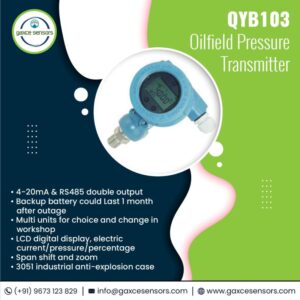
Oildield Pressure Transmitter QYB103 GAXCE SENSORS – Environmental, Health and Safety – Copy

Oildield Pressure Transmitter QYB103 GAXCE SENSORS – Environmental, Health and Safety QYB103 utilizes a high quality diffused silicon sensor and a durable industrial anti-explosion case, which outputs an electric current signal of 4–20mA and a digital signal of Modbus. This pressure sensor can be used to monitor pipeline pressure in petroleum and chemical engineering because of its high accuracy, stability, long operating life, ease of installation, and high reliability. Main Features: Two outputs: 4-20 mA & RS485 Backup battery could last 1 month after outage Multi units for choice and change in workshop LCD digital display, electric current/pressure/ percentage Span shift and zoom Case 3051 of industrial anti-explosion technology To contact Gaxce Sensors, please email info@gaxcesensors.com You can reach us at +91-9673123829. Kindly visit our website so you will get more product information. www.gaxcesensors.com

Uncategorized

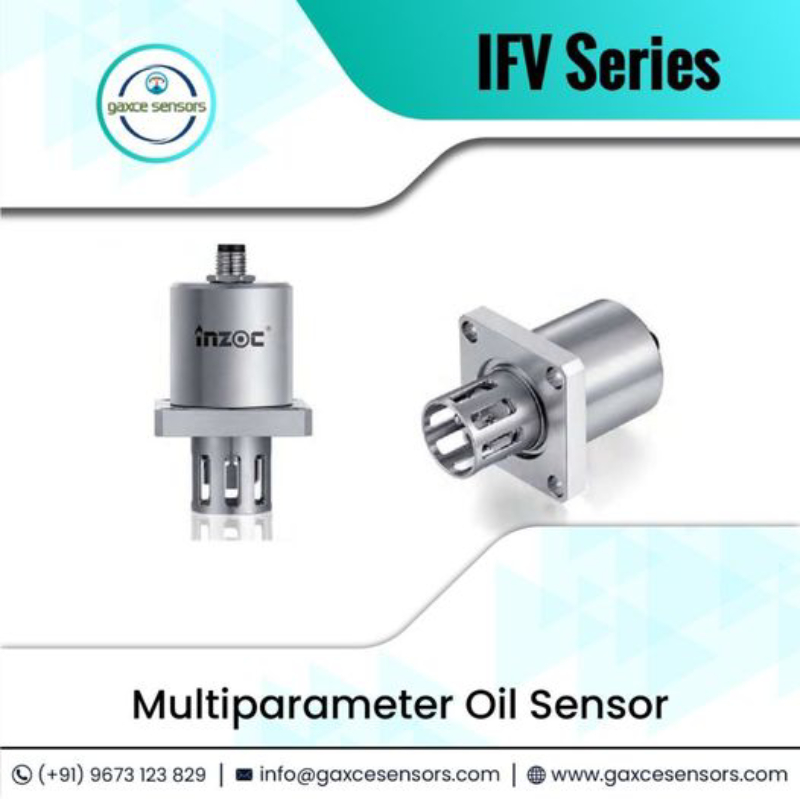
IFV Series Multi-parameter Oil Sensor GAXCE SENSORS – Environmental, Health and Safety

IFV Series Multi-parameter Oil Sensor GAXCE SENSORS – Environmental, Health and Safety The IFV Series multi-parameter oil sensor combines patented multi-function integrated detection technology, FOS model data, and an industry-leading back-end data processing module to deliver a multi-functional oil detection sensor with a wide range, high precision, and low online requirements. In the oil monitoring industry, it is considered a representative product due to its wide range and multiple parameters. It uses an advanced precision resonant mechanism for measuring viscosity and density, and integrates dynamic viscosity and density index internally. Parameters such as dynamic viscosity, density, dielectric constant, moisture content, and temperature can be selected using internal model data. Kinematic viscosity, viscosity index, electrical conductivity, and other indicators can also be monitored in real time. This sensor offers a compact, multi-functional design for comprehensive online oil monitoring, achieving efficient integration of multiple functions in a small form factor. Application: Steel, Petrochemical, Shield, Electric Power, Wind Power, Large Equipment, OEM Integration Application Oil: Gear Oil, Hydraulic Oil, Turbine Oil, Diesel Oil, Insulation Oil To contact Gaxce Sensors, please email info@gaxcesensors.com You can reach us at +91-9673123829. Kindly visit our website so you will get more product information. www.gaxcesensors.com

Uncategorized

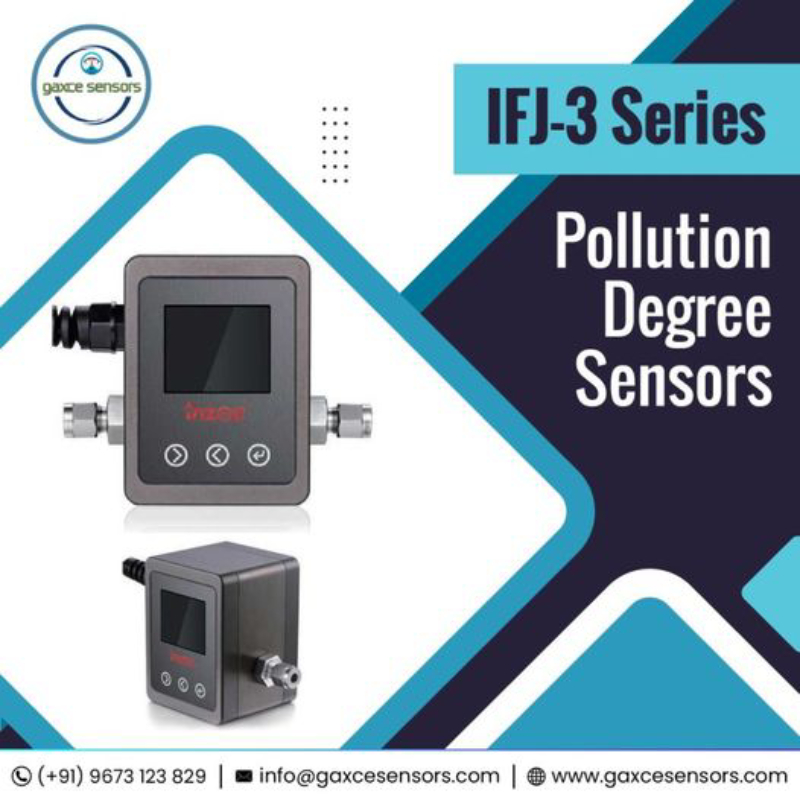
IFJ-3 Series Pollution Degree Sensor GAXCE SENSORS – Environmental, Health and Safety

Compact Pressure Transmitter QYB101 GAXCE SENSORS – Environmental, Health and Safety The IFJ series pollution sensor adopts single laser shading counting technology with fast detection speed, strong anti-interference, high precision, and good repeatability, and can accurately detect particle size and quantity distribution in oil samples. By combining Fourier waveform analysis with small particle measurement, high purity oil products and small particles can be measured with much greater precision. With the help of INZOC Care’s patented detection technology, combined with over 20 years of field application experience with pollution control products, the IFJ pollution sensor can automatically correct invalid and interference data, especially in environments where trace moisture and air bubbles are present due to pollution. This results in improved accuracy and reliable performance. Application: Steel, Petrochemical, Shield, Electric Power, Wind Power, Large Equipment, OEM Integration Application Oil: Gear Oil, Hydraulic Oil, Turbine Oil, Diesel Oil Data Transmission: Built-in-screen display/wired transmission To contact Gaxce Sensors, please email info@gaxcesensors.com You can reach us at +91-9673123829. Kindly visit our website so you will get more product information. www.gaxcesensors.com

Uncategorized

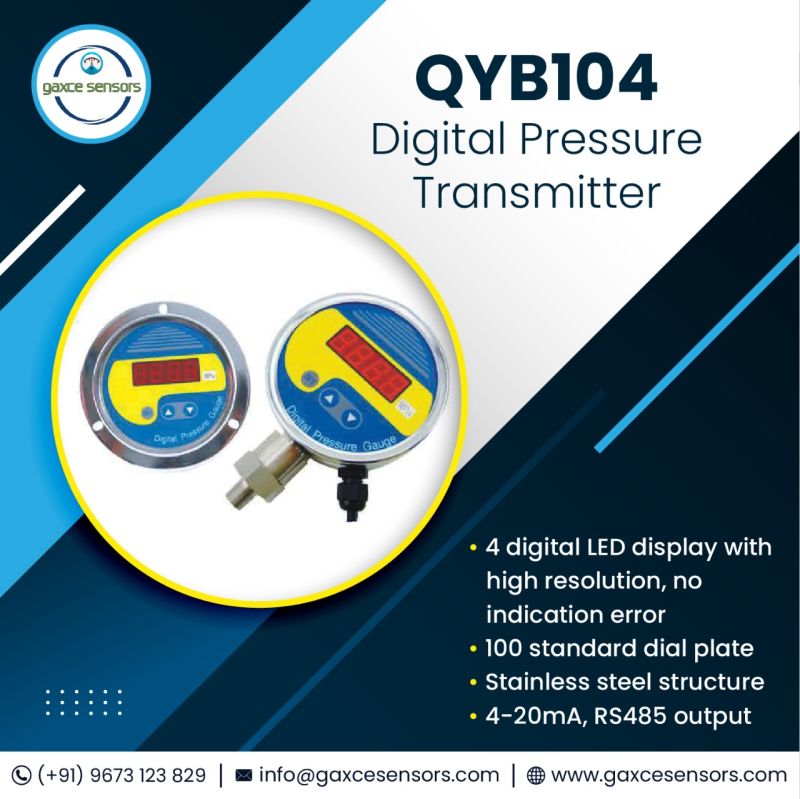
Digital Pressure Transmitter QYB104 GAXCE SENSORS – Environmental, Health and Safety

Digital Pressure Transmitter QYB104 GAXCE SENSORS – Environmental, Health and Safety A digital pressure transmitter such as the QYB104 is easy to operate, easy to adjust, and safe to use. It is used in fluid pressure measurement in water and electric, water supply, petroleum, chemical engineering, mechanical and hydraulic fields Main Features: 3 digit LED display with high resolution, no incation error 100 standard dial plate Stainless steel structure 4-20mA, RS485 output To contact Gaxce Sensors, please email info@gaxcesensors.com You can reach us at +91-9673123829. Kindly visit our website so you will get more product information. www.gaxcesensors.com

Uncategorized

Industrial Pressure Transmitter QYB102 GAXCE SENSORS – Environmental, Health and Safety

Industrial Pressure Transmitter QYB102 GAXCE SENSORS – Environmental, Health and Safety QYB102 is equipped with a high-quality diffused silicon sensor and an antiexplosion industrial case. A stable output and display make it suitable for petroleum and chemical engineering in harsh environments. Main Features: Various measuring ranges available High Protection grade, high accuracy, high stability, high reliability Displays, LED or LCD Shock resistance and anti- vibration Anti-explosion and intrinsically safe To contact Gaxce Sensors, please email info@gaxcesensors.com You can reach us at +91-9673123829. Kindly visit our website so you will get more product information. www.gaxcesensors.com

Uncategorized

Compact Pressure Transmitter QYB101 GAXCE SENSORS – Environmental, Health and Safety

Compact Pressure Transmitter QYB101 GAXCE SENSORS – Environmental, Health and Safety In addition to ceramic sensors, QYB101 has a stainless steel case as well. There are many uses for it, such as compressors, refrigeration equipment, pneumatic equipment, etc. Main Features: An efficient structure Cost-effective Import Ceramic Sensor Stainless steel surface with medium, high corrosion resistance Suitable for normal temperature medium long-term and stable working A high degree of shock resistance, vibration resistance, and corrosion resistance To contact Gaxce Sensors, please email info@gaxcesensors.com You can reach us at +91-9673123829. Kindly visit our website so you will get more product information. www.gaxcesensors.com

Scroll to Top